Family–School Conversations
How to Prepare for a 15-Minute Parent–Teacher Conference
A focused before-during-after system for a short parent–teacher conference, including evidence, questions, actions, and follow-up.
The short answer
Prepare one page, not a dossier: two strengths with evidence, one or two priority concerns, three questions, and the outcome you want from the meeting. During the conference, spend less time reciting information and more time agreeing on one school action, one home action if appropriate, an owner, and a review date.
Before the meeting: turn impressions into a short evidence set
Choose recent examples that illuminate learning or classroom participation: a work sample, assessment pattern, assignment completion trend, observation, or student reflection. One representative example is usually more discussable than a thick pile.
| Prepare | Useful form | Avoid |
|---|---|---|
| Strength | Specific skill plus example | “Doing great” without evidence |
| Concern | Observed pattern and context | Labels or assumptions about motive |
| Question | Open prompt tied to learning | A list too long for the time |
| Goal | One realistic next step | Solving every issue in one meeting |
Parents can prepare the same way: what the child says at home, a change they have noticed, their top question, and any context the school genuinely needs.
During the meeting: use a 15-minute sequence
- Minutes 0–2 — connect: confirm names, pronunciation, preferred language, and the purpose of the conversation.
- Minutes 2–5 — strengths: open with specific evidence of progress or engagement.
- Minutes 5–9 — priority: discuss one or two patterns, invite the other person’s perspective, and clarify what is known versus assumed.
- Minutes 9–13 — action: agree on a small support step, owner, evidence, and check-in date.
- Minutes 13–15 — recap: restate the agreement and the best follow-up channel.
If interpretation is needed, arrange approved language support rather than using a child as interpreter for a consequential conversation.
Questions that produce usable information
For families to ask
- What is one recent example of progress?
- Where does my child become stuck, and what happens just before that?
- Which classroom strategy is helping now?
- What is one reasonable thing we can reinforce at home?
- How and when will we know whether the plan is working?
For teachers to ask
- What does the student say about this subject or routine at home?
- Have you noticed a context in which this is easier or harder?
- Which communication method is practical for your family?
- Is there information you want the school team to understand?
Questions should invite information, not shift professional responsibility onto the family.
After the meeting: write a four-line follow-up
Record the priority, agreed action, owner, and review date. Send or store it through the school’s approved channel. A useful follow-up might read: “We will use the assignment checklist for two weeks. Ms. Lee will model it in class; Jordan will bring it home on Tuesdays. Family will note whether the steps are clear. We will review on September 14.”
Do not promise services, outcomes, or timelines outside your authority. Escalate questions requiring a specialist, administrator, or formal process.
Use notes responsibly
Follow school policy for student records, accessibility, safeguarding, interpretation, and communication. Keep conference worksheets secure and include only what is needed. A personal printable should not become an unofficial permanent record or contain sensitive details that belong in an approved system.
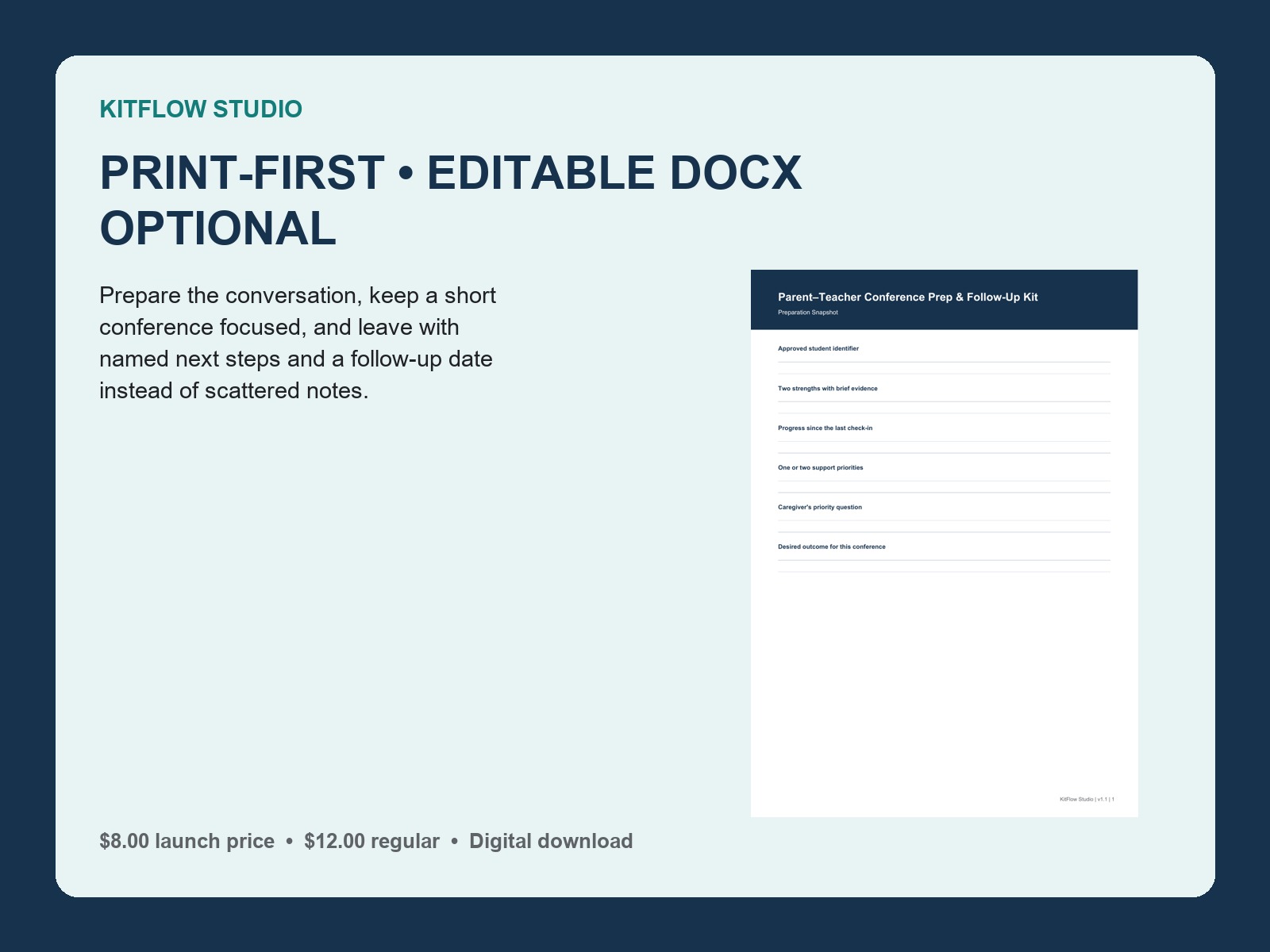
The Parent–Teacher Conference Prep & Follow-Up Kit includes a four-page conference-day packet, fuller planning forms, and optional editable DOCX files. It is designed to print and use at the table; it is not an official student-record system.
Frequently asked questions
What if there is more to discuss than 15 minutes allows?
Name the highest-priority issue, agree on the immediate next step, and schedule the right follow-up with the appropriate people.
Should the student attend?
That depends on age, school practice, purpose, and the student’s needs. If the student participates, prepare them for their role and avoid discussing sensitive matters unexpectedly.
What if parent and teacher disagree?
Separate observations from interpretations, return to concrete evidence, record where views differ, and identify the next information or process needed.